
What if ERP Project were like Aerospace projects with nearly zero failures

Kati Hvidtfeldt • February 3, 2026

What ERP Can Learn from Aerospace, Pharma, and Financial Services

Four blue and yellow U.S. Navy Blue Angels jets flying in formation, leaving white contrails against a clear blue sky.

Industries like aerospace & defense, life sciences, and financial services routinely deliver initiatives as complex, or more complex, than ERP, yet with materially higher success rates.


Their advantage is not better software or bigger budgets, but discipline:

  1. requirements are treated as decision-grade commitments
  2. progress is gated by evidence
  3. data integrity is validated upfront
  4. independent parties are empowered to stop or redirect projects before risk becomes irreversible.


Failure is prevented early through structured risk reduction, not managed late through heroics.


If ERP projects adopted this discipline, the industry would fundamentally change. ERP would no longer be driven by optimism or feel-good assumption, vendor conviction, or timeline pressure.


Instead, it would be governed as a business-critical system change, where risk is quantified, decisions are validated independently, and execution only advances when readiness is proven. The result would be fewer big-bang failures, more predictable outcomes, and materially lower enterprise exposure.


CASE STUDY - Aerospace & Defense (Aircraft, Space, Weapons Systems)


Complexity level: Extreme

Failure tolerance: Near zero

Success rate: High because failure is unacceptable


Why they succeed

  • Requirements are frozen early and treated as contractual, not “fluid ideas”
  • Stage-gate governance: no phase advances without evidence
  • Independent verification & validation (IV&V) teams
  • Subsystem ownership is crystal clear
  • Change is expensive by design, so people think hard before requesting it


ERP lessons


✔ ERP requirements should be decision artifacts, not wish lists

✔ No phase progression without objective exit criteria

✔ Independent ERP assurance ≠ vendor QA

✔ Make customization painful enough to discourage casual scope creep


How to apply

  • Lock requirements at decision points (fit, build, deploy)
  • Independent “IV&V” role is a must (not SI, not ISV, not vendor)
  • Price change requests transparently and publicly


Why HandsFree ERP Makes It Different for ERP projects similar to A&D


HandsFree ERP applies the same complex-systems governance used in high-reliability industries directly to ERP decisions and delivery.

  • Framework-driven decisions replace subjective opinions
  • Independent verification replaces vendor self-validation.
  • Data diagnostics happen before commitments are made, not after problems surface.
  • AI is used to prioritize initiatives by value, effort, and risk not hype.
  • Executive risk governance replaces status reporting with real exposure visibility.


That combination is not traditional ERP consulting.


It is complex systems risk management applied to ERP and HandsFree ERP is not as another advisor in the process, but as the control mechanism that prevents ERP failure in the first place. We use tools, processes, frameworks and experts / people that are state-of-art and make data driven. 


1. ERP Lifecycle Mapped to Aerospace & Pharma Phase Gates


This reframes ERP from “IT project” → regulated, high-risk system change.


Traditional ERP View (why it fails)

  • Discover → Design → Build → Test → Go-Live
  • Assumes progress = activity
  • Optimism-driven, vendor-led


High-Reliability Industry View and HandsFree ERP Framework & Tools 

ERP Phase Aerospace / Pharma Equivalent What’s Actually Proven
Phase 0: Decision Readiness Concept Feasibility / PreClinical Business case viability, data integrity, organizational capacity
Phase 1: Fit & Risk Validation Preliminary Design Review (PDR) / Phase I Requirements realism, solution fit, risk exposure
Phase 2: Design Control Critical Design Review (CDR) / Phase II Scope stability, customization justification, integration feasibility
Phase 3: Build & Verification System Integration / Phase III Configuration integrity, process fidelity, data migration accuracy
Phase 4: Readiness & Cutover Flight Readiness Review / Regulatory Approval Operational readiness, rollback scenarios, economic exposure
Phase 5: Stabilization & Optimization Post-Launch Surveillance Performance validation, benefits realization, control maturity

Key shift:

👉 ERP phases advance only when evidence exists, not when timelines demand it.


2. ERP Independent Verification & Validation (IV&V) Operating Model


This is the missing role in most ERP programs and the reason other industries outperform ERP.


What IV&V Is (and is not)


Not:

  • Vendor QA
  • SI internal review
  • PMO status reporting
  • Steering committee opinion


Is:

  • Independent, evidence-based risk and decision validation
  • Accountable only to executives / board
  • Empowered to stop, slow, or redirect


ERP IV&V Core Functions


1. Decision Assurance

  • Validate requirements are decision-grade
  • Confirm assumptions are explicit and tested
  • Pressure-test vendor claims against reality


2. Risk Quantification

  • Translate ERP risks into financial, operational, and people impact
  • Identify silent failure modes (data, change fatigue, hidden dependencies)


3. Phase Gate Certification

  • Issue Go / Conditional Go / No-Go recommendations
  • Require objective exit criteria - not narratives


4. Change Control Oversight

  • Force cost, timeline, and risk transparency for every change
  • Prevent “death by a thousand enhancements”


5. Executive Signal Clarity

  • Strip noise from reporting
  • Replace green dashboards with truthful exposure summaries


Where IV&V Sits (Critically Important) 


Board / Executive Sponsors

IV&V  ← Independent

PMO / SI / Vendor / Internal Teams


IV&V  never reports to delivery teams. Ever.


Why your Board Cares


ERP is a strategic asset enabling the business growth and there is a clear ROI. But it’s a system change that is risk-managed and insured.


ERP failures don’t come from bad software.


They come from unmanaged decision risk, invisible data risk, and optimism replacing evidence.”


Other industries facing comparable complexity - aerospace, pharma, financial services - do not allow:

  • Vendors to validate themselves
  • Progress without proof
  • Scope changes without economic consequences
  • Data readiness to be assumed


ERP projects still do.


ERP is not a technology implementation.


It is a business-critical system change with asymmetric downside risk.


Once live:

  • You can’t easily roll it back
  • Errors propagate instantly
  • Operational failure becomes enterprise failure


That makes ERP closer to aircraft certification than software deployment.


The Board’s Three Responsibilities (Often Missed)


1. Ensure Decision Quality Before Commitment

  • Are requirements real or inferred?
  • Is data fit-for-purpose?
  • Is capacity aligned with scope?


2. Demand Independent Risk Validation

  • Who benefits if the project continues?
  • Who is paid to stop it if it shouldn’t?


3. Control Risk, Not Just Spend

  • What are the downside scenarios?
  • What triggers escalation or pause?
  • What evidence must exist to proceed?


If we governed ERP the way we govern aircraft, drugs, or financial infrastructure, failure rates would collapse.


The reason they don’t isn’t complexity. It’s governance discipline.


HandsFree ERP operates just like the ERP Independent Verification & Validation function being unbiased with data driven frameworks and tools to drive the insurance for your ERP Project.

HandsFree ERP is dedicated to supporting clients with their ERP initiatives, enabling companies to seamlessly connect users with their ERP partners. By utilizing skilled professionals, streamlined processes, and cutting-edge tools, HandsFree ERP significantly boosts the success rates of ERP projects.

HandsFree logo with a check. A blue shield with a check mark sits on the check. A green dollar sign is on the right.
January 28, 2026
ERP decisions carry financial and organizational risk. HandsFree ERP provides independent guidance to improve decision quality and prevent costly failures.
By Kati Hvidtfeldt January 16, 2026
You Cannot Know What You Don’t Know Unless ERP Delivery Is Your Profession
By Peter Joeckel January 7, 2026
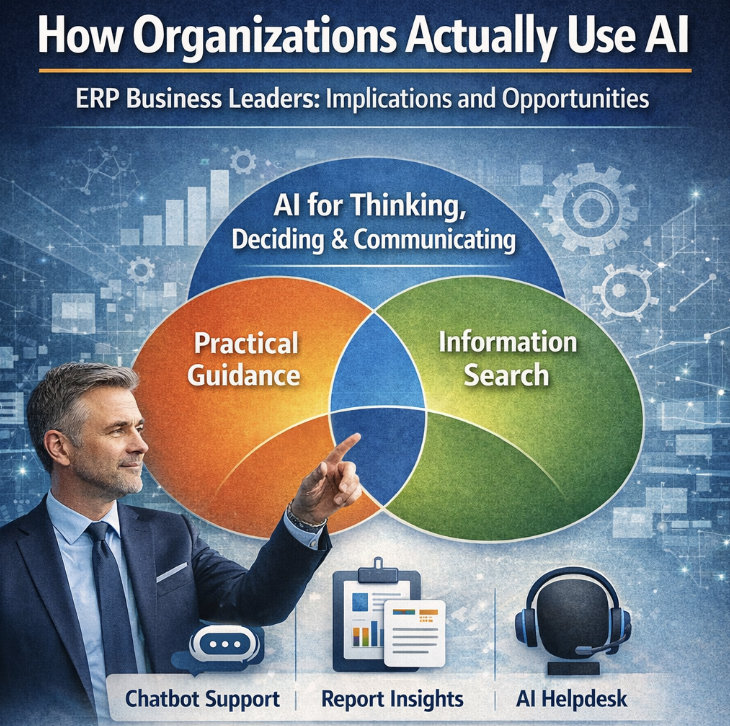
ERP Business Leaders Implications and Opportunities
By Kati Hvidtfeldt January 5, 2026
Lessons from the Front Lines of ERP and Reporting
By Peter Joeckel January 1, 2026
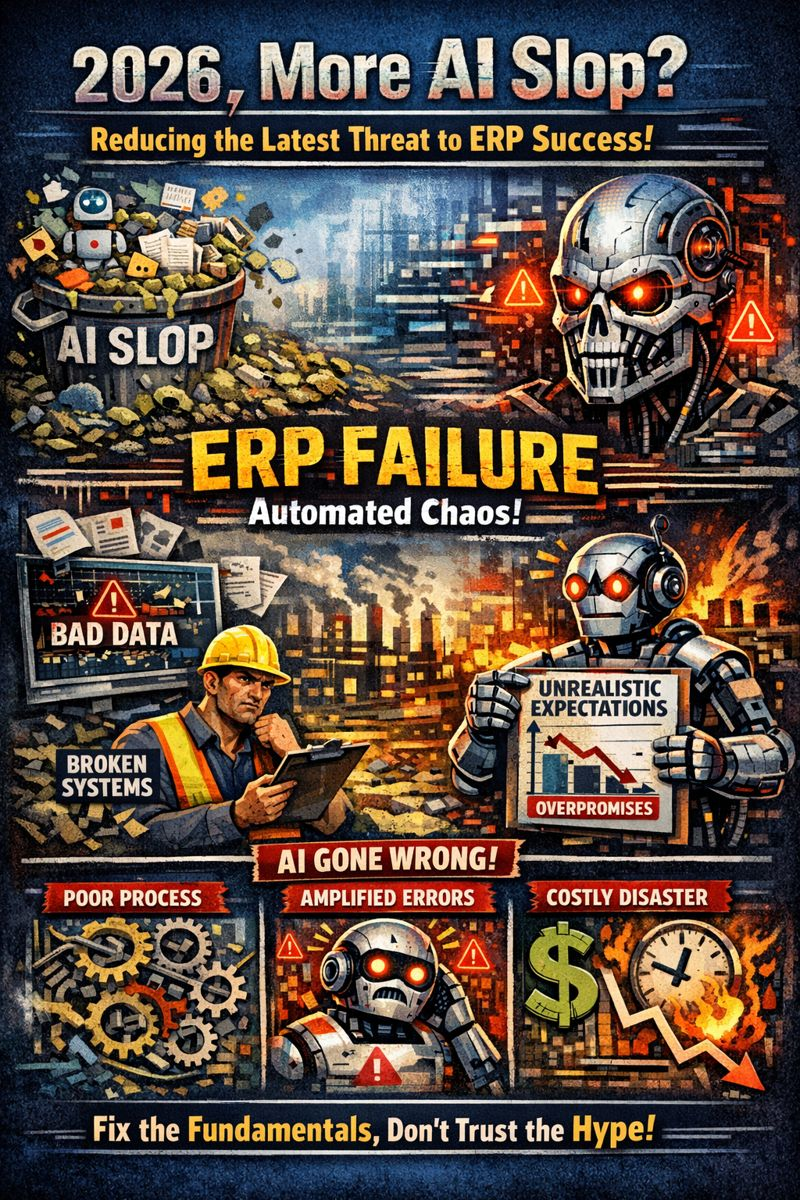
Reducing the Latest Threat to ERP Success!
By Kati Hvidtfeldt December 29, 2025
Enterprise Resource Planning (ERP) selection has changed.
Text:
By Kati Hvidtfeldt December 10, 2025
Discover the hidden superpower in Business Central that can transform your operations. Unlock efficiency and drive growth with our expert insights and strategies.
Silhouette of two people holding hands up;
By Kati Hvidtfeldt December 9, 2025
Discover how to leverage AI effectively and explore practical steps to get started. Unlock the potential of artificial intelligence for your business today!
Magazine cover featuring Kati Hvidtfelat. Headline:
By Kati Hvidtfeldt November 26, 2025
Discover how a pioneering woman is transforming ERP with innovative strategies and simplicity, shaping the future of business solutions in the USA.
Calendar with pushpin highlighting a date, question about the cost of missing ERP go-live. Text: 15-20% of project cost, 65% time-saving.
By Kati Hvidtfeldt November 18, 2025
Discover the common pitfalls that lead to ERP and AI project failures. Learn how to identify and address these root causes for successful implementation.
Red background with text:
By Peter Joeckel September 11, 2025
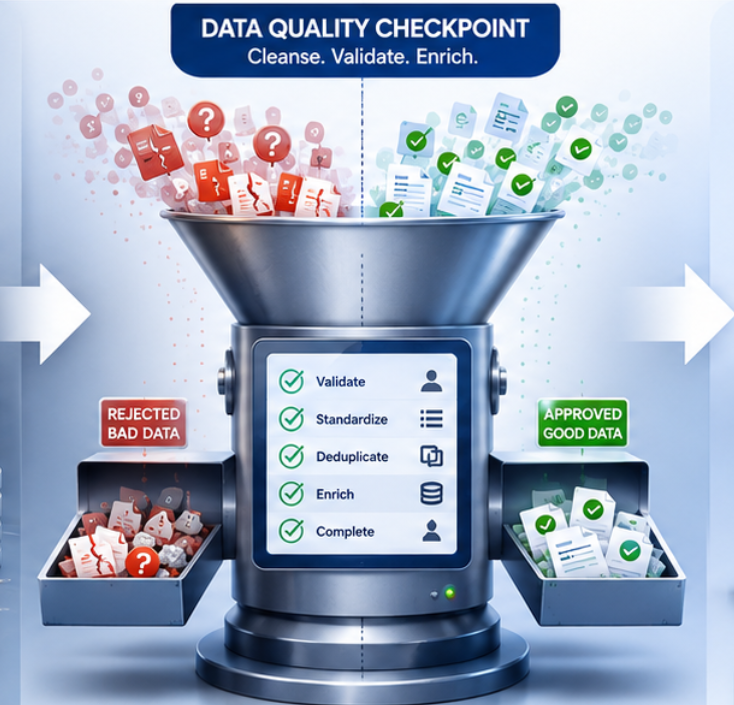
Discover how poor data quality can jeopardize your D365 F&O implementation. Learn strategies to defuse potential issues and ensure a successful deployment.
Server room with tangled cables juxtaposed with a computer desk and wall monitors displaying data.
By Kati Hvidtfeldt September 5, 2025
Discover essential data governance lessons from Vodafone's ERP migration experience to avoid pitfalls and ensure a smooth transition for your next project.