Why AI Fails Without a Data Strategy

Kati Hvidtfeldt • January 5, 2026

Lessons from the Front Lines of ERP and Reporting

Why Data Strategy Requires Process Knowledge, Not Just Tools


Early in my consulting career, I was working on a large, complex implementation for DIRECTV Latin America, supporting business solutions across multiple countries. Even back then, the organization had what many companies still chase today: a lot of data. It was a data heaven.

  • There were reports.
  • There were queries.
  • There were nightly batch jobs validating data integrity.


From a technical perspective, everything looked pristine.

And yet, the business couldn’t make sense of the data.


When “More Reporting” Makes Things Worse


At the time, reporting tools were far less flexible than they are today. While plenty of standard reports existed, the client wanted information presented in their internal reporting format. So they made what seemed like a logical decision: purchase a new reporting tool that would allow them to build their own reports.


I supported the decision. On paper, it made sense. I thought empowering the users would be great.


Shortly afterward, I traveled to Latin America for another project. When I returned weeks later, the following Monday morning, something felt off.


Three women from the client’s corporate project team were waiting at my desk, before I had even logged in. And before I had my cup of coffee 😊.


Their message was simple and urgent:

“The reporting tool doesn’t work. The data doesn’t make sense.”


That surprised me. I knew the data was clean. I personally ran weekly integrity checks. The nightly processes showed no discrepancies. From a database perspective, everything was exactly as it should be.


So I started digging.


Clean Data Can Still Be Wrong


What I discovered was eye-opening and formative for my entire career.


The issue wasn’t the data.
The issue was how the data was being pulled.


The reports were built by extracting information from random tables with no logical relationship to each other. The numbers were technically accurate, but conceptually meaningless.


This wasn’t a tooling failure.
It was a data literacy failure.


The people building the reports didn’t understand:

  • How the data was structured
  • How tables related to each other or business processes
  • Which data represented transactions vs. summaries
  • Where truth actually lived in the system


Once I corrected the report logic, using my understanding the business processes, the solution logic and the data model, the reports immediately made sense.


The Lesson Most Companies Learn Too Late

That experience crystalized something that is still true today, even with AI, analytics platforms, and self-service BI tools:

If someone doesn’t understand the business process and the data structure, they have no chance of getting data right.


This applies to:

  • Reporting
  • Data cleansing
  • Data migration
  • Master data governance
  • Analytics and AI initiatives


You cannot separate data from process.
You cannot delegate “data work” to people who don’t understand how the business actually runs.


Choose the Data Tools Wisely

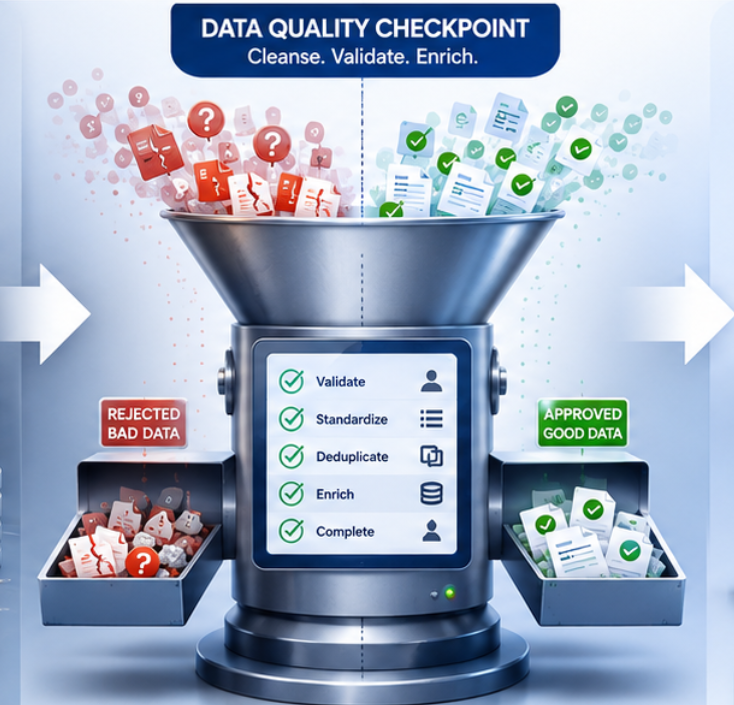
Today’s tools are far more sophisticated. Data quality platforms, integration layers, AI-driven insights, and analytics engines can do remarkable things.


But tools are only force multipliers.


Without:

  • Clear data ownership
  • Process-aware data rules
  • Structural understanding of how data is created, transformed, and consumed

…you’re not managing data, you’re guessing.


Using tools for ERP Data Cleaning, and keeping Data quality pristine that is developed by someone who is not an ERP data expert. Oh boy! Excel is certainly not for this job.


What a Real Data Strategy Requires


A real data strategy is not a software purchase. It requires:

  1. Business Process Understanding
    Data must be grounded in how work actually happens, not how systems are configured.
  2. Data Structure Literacy
    Knowing where data lives, how it relates, and what it represents is non-negotiable.
  3. Clear Accountability
    Someone must be responsible for data decisions, not just data storage.
  4. The Right Tools - Used Correctly
    Tools should support clarity and discipline, not mask confusion.


Why Pristine Data and Understanding of Data Still Matters More Than Ever


In 2026, many organizations are trying to “fix” bad data with:

  • More dashboards
  • AI agents
  • Automation layers


But automation on top of misunderstood data doesn’t solve the problem. It accelerates it.


The fundamentals haven’t changed since my DIRECTV days:

  • Data only has value when it reflects reality
  • Reality lives in business processes
  • And someone must understand both


That lesson, learned early in my career, is why we emphasize data strategy, process discipline, and enablement today, not just technology.


Because clean data isn’t enough.
Correct data is what actually moves the business forward.

HandsFree ERP is dedicated to supporting clients with their ERP initiatives, enabling companies to seamlessly connect users with their ERP partners. By utilizing skilled professionals, streamlined processes, and cutting-edge tools, HandsFree ERP significantly boosts the success rates of ERP projects.

By Peter Joeckel January 7, 2026
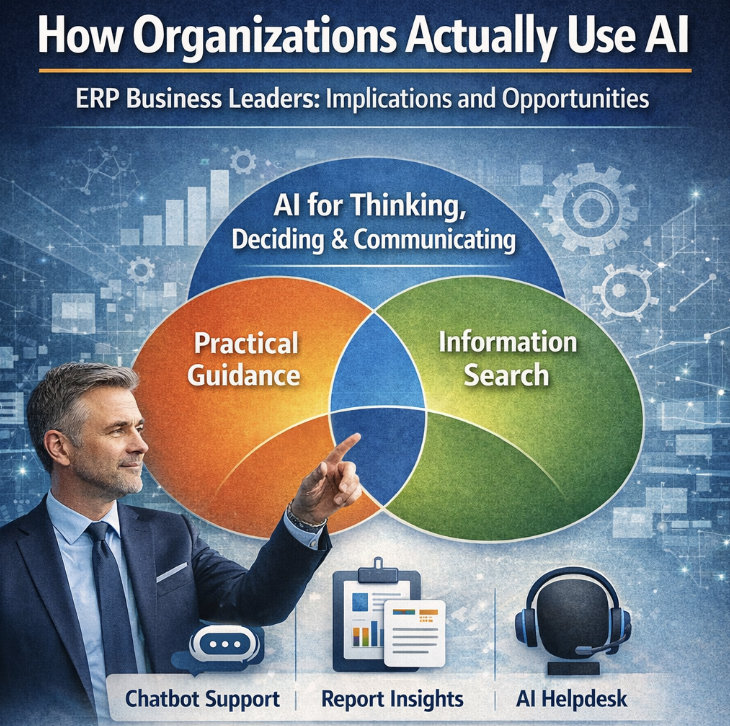
ERP Business Leaders Implications and Opportunities
By Peter Joeckel January 1, 2026
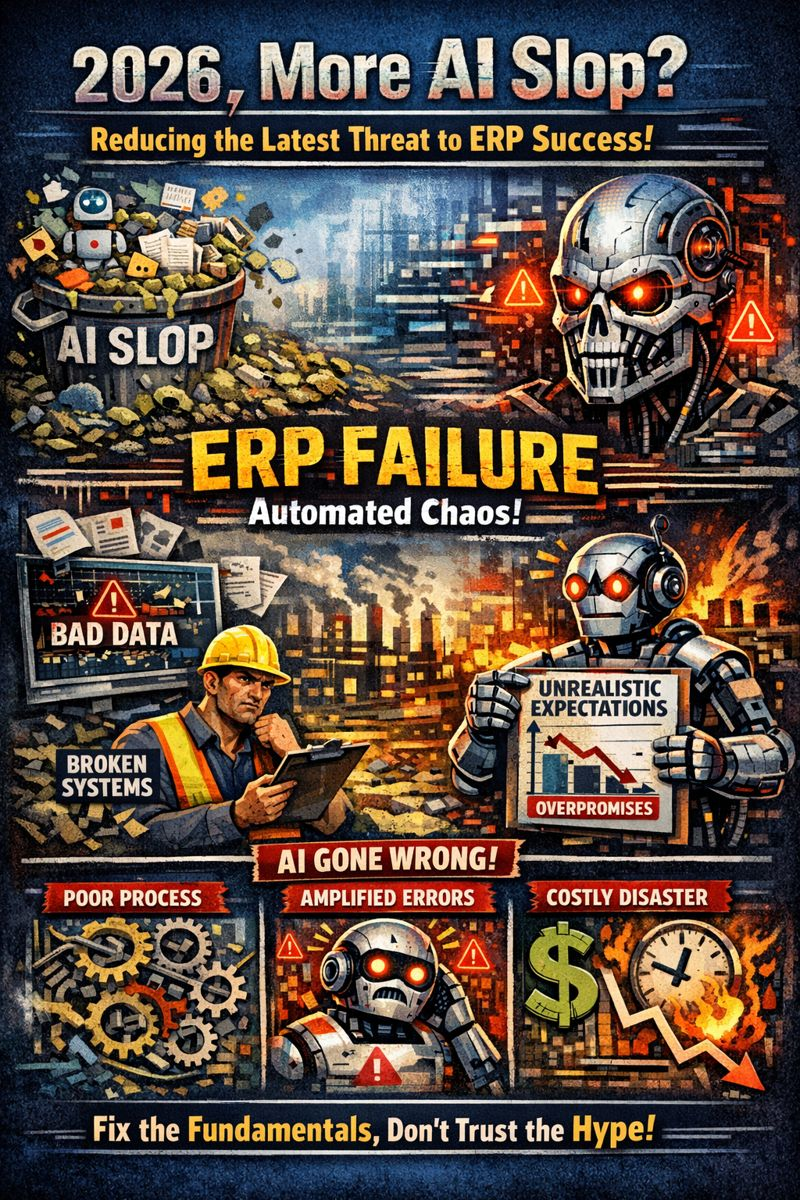
Reducing the Latest Threat to ERP Success!
By Kati Hvidtfeldt December 29, 2025
Enterprise Resource Planning (ERP) selection has changed.
Text:
By Kati Hvidtfeldt December 10, 2025
Discover the hidden superpower in Business Central that can transform your operations. Unlock efficiency and drive growth with our expert insights and strategies.
Silhouette of two people holding hands up;
By Kati Hvidtfeldt December 9, 2025
Discover how to leverage AI effectively and explore practical steps to get started. Unlock the potential of artificial intelligence for your business today!
Magazine cover featuring Kati Hvidtfelat. Headline:
By Kati Hvidtfeldt November 26, 2025
Discover how a pioneering woman is transforming ERP with innovative strategies and simplicity, shaping the future of business solutions in the USA.
Calendar with pushpin highlighting a date, question about the cost of missing ERP go-live. Text: 15-20% of project cost, 65% time-saving.
By Kati Hvidtfeldt November 18, 2025
Discover the common pitfalls that lead to ERP and AI project failures. Learn how to identify and address these root causes for successful implementation.
Red background with text:
By Peter Joeckel September 11, 2025
Discover how poor data quality can jeopardize your D365 F&O implementation. Learn strategies to defuse potential issues and ensure a successful deployment.
Server room with tangled cables juxtaposed with a computer desk and wall monitors displaying data.
By Kati Hvidtfeldt September 5, 2025
Discover essential data governance lessons from Vodafone's ERP migration experience to avoid pitfalls and ensure a smooth transition for your next project.
Man looking at a monitor displaying data quality, integrity, and ERP success indicators in a blue-lit office setting.
By Kati Hvidtfeldt August 6, 2025
Ensure long-term success with expert ERP data quality and implementation. Discover strategies that enhance data integrity and optimize your business processes.
Blue, transparent computer interface with flowcharts and data displayed in a futuristic setting.
By Kati Hvidtfeldt July 25, 2025
Discover essential tips for ERP data migration and learn how to avoid common pitfalls to ensure a smooth transition and maximize your system's potential.
Man in futuristic setting with title
By Kati Hvidtfeldt July 15, 2025
Discover the top 3 ERP data prep mistakes that can cost your business millions. Learn how to avoid these pitfalls and optimize your data management strategy today!